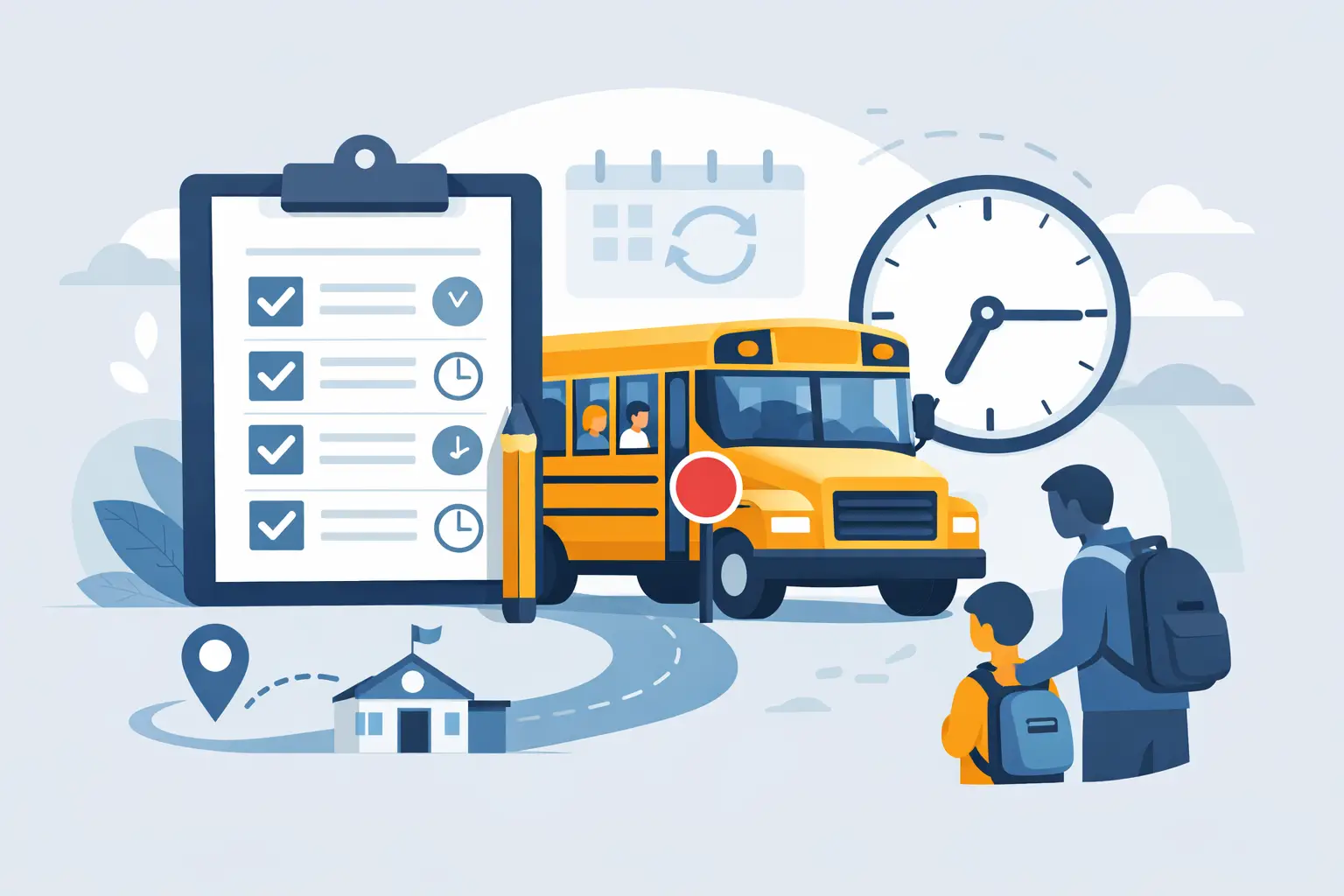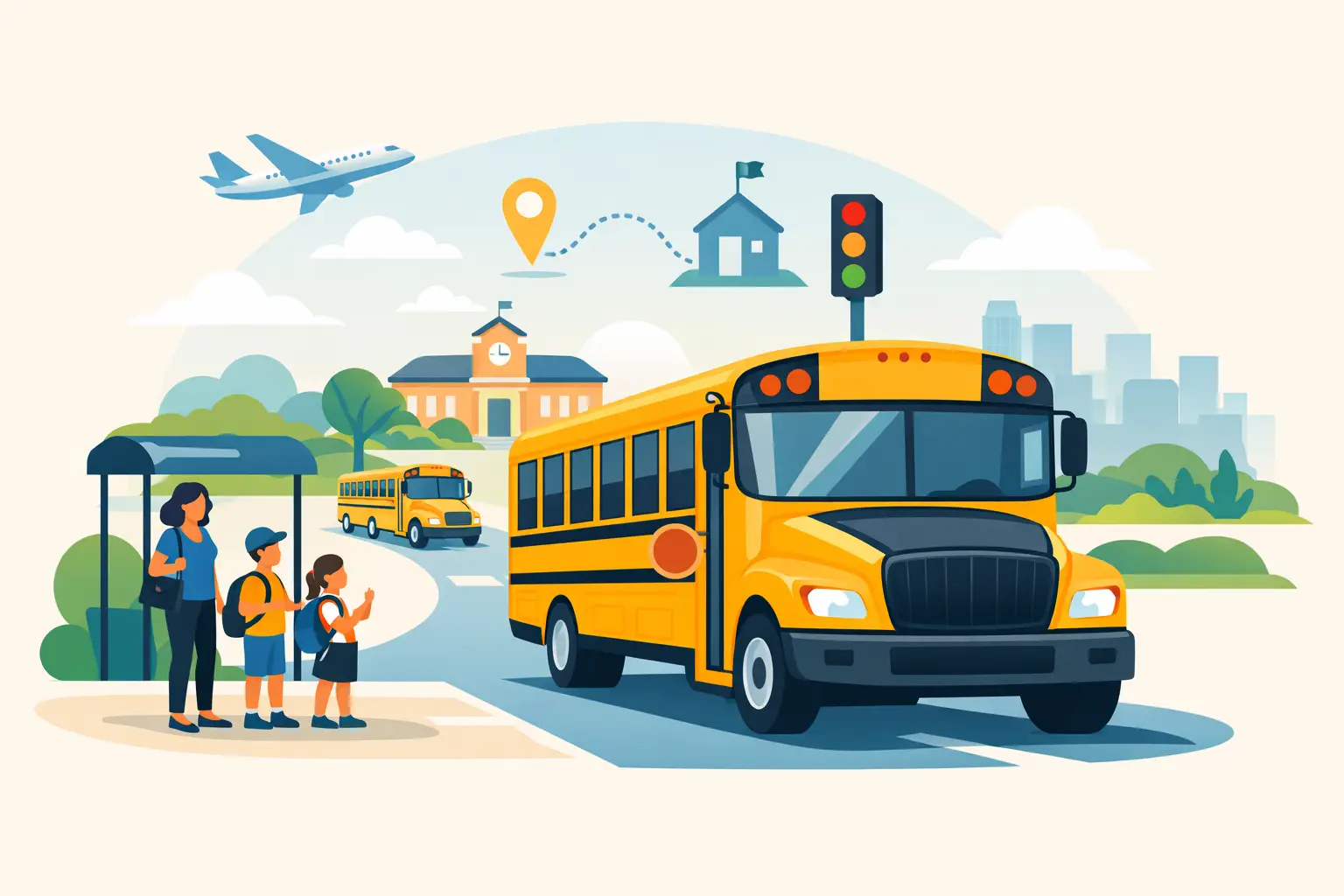
The school run looks simple from the outside. A bus arrives, children board, and the trip begins. But when parents ask what is school bus transportation, they are usually asking something bigger: Who is responsible for my child from pickup to drop-off, how is safety managed, and what makes a service dependable every day?
School bus transportation is an organized transport service that moves students between home, school, and approved pickup or drop-off points on a scheduled basis. It is not just about providing a vehicle. It is a structured daily operation built around route planning, licensed drivers, student safety procedures, attendance awareness, timing control, and communication with schools and families.
For schools and parents, that distinction matters. A school bus service is not the same as booking a ride when needed. It is a recurring system designed to reduce uncertainty and make sure students reach school and home safely, on time, and with proper oversight.
What is school bus transportation in practical terms?
In practical terms, school bus transportation is a managed service for daily student commuting. The operator plans routes based on where students live, school start and end times, traffic conditions, vehicle capacity, and safety requirements. Drivers follow fixed procedures for pickup, drop-off, and student handling rather than simply driving from one location to another.
That structure is what separates school transportation from ordinary charter travel. A charter trip may be one-off and flexible. School transport is routine, repetitive, and accountability-driven. The service must work consistently in the morning rush, during weather disruptions, and across changing academic schedules.
Depending on the school and area, transportation may be arranged directly by a school, by a specialist transport company, or through a coordinated contractor model. In all cases, the goal is the same: safe and reliable movement of students with clear responsibility at every stage of the trip.
The core parts of a school bus service
A proper school transport service has several moving parts working together.
The first is route design. Students are grouped into sensible pickup zones, and routes are planned to balance travel time, punctuality, and bus occupancy. A route that looks efficient on paper may not work in real traffic, so experienced operators adjust based on actual road conditions and school-day patterns.
The second is vehicle suitability. Not every route needs a large bus. In many school transport arrangements, especially in urban areas or neighborhoods with tighter road access, small- to mid-capacity buses are more practical. They are easier to deploy, easier to route through residential areas, and often better suited for recurring institutional transport where passenger counts are stable.
The third is driver qualification and conduct. School bus drivers are expected to do more than operate a vehicle. They need to maintain safe driving behavior, manage boarding and alighting calmly, follow route procedures, and communicate issues promptly. For younger students in particular, consistency in driver assignment can also help build trust and reduce confusion.
The fourth is communication. Parents and guardians want to know when there is a delay, a route change, or an issue that affects pickup. Schools also need clear coordination when dismissal timing changes or special events alter traffic flow. Reliable school transportation depends as much on communication discipline as it does on driving.
Why families and schools rely on it
The value of school bus transportation is not just convenience. It solves a daily operational problem for households and institutions.
For parents, it removes the pressure of coordinating school drop-off and pickup around work schedules. That matters even more in homes with multiple children, fixed work start times, or longer school commutes. A dependable service gives families routine, and routine reduces stress.
For schools, school bus transportation supports attendance, arrival control, and campus operations. When transport is organized, schools can better manage student arrival windows and reduce congestion at gates and curbside areas. It also lowers the number of private vehicles moving through school zones, which can improve overall safety.
There is also an equity element. Some students live farther from school or do not have a household schedule that allows for daily driving. Organized bus service helps maintain access to education in a practical, repeatable way.
Safety is the real foundation
When people ask what is school bus transportation, safety is usually the concern behind the question. A true school transport service is built around protective procedures, not just transport availability.
That starts with licensed personnel and compliant vehicles. Drivers should meet regulatory requirements, and buses should be maintained on schedule. Vehicles used for school transport need to be roadworthy, suitable for passenger use, and operated under the standards required for student movement.
Safety also depends on process. Pickup points should be clearly defined. Boarding and drop-off should be supervised through consistent procedures. Student counts, route records, and parent communication all help reduce the chance of preventable mistakes.
It is also worth being realistic: safety is not achieved by promises alone. It comes from operational discipline day after day. A provider may advertise care and reliability, but what matters is whether that provider can maintain punctual routes, trained drivers, proper fleet support, and fast communication when conditions change.
How routes are planned and managed
The quality of school bus transportation often comes down to route management. A good route is not simply the shortest line between stops.
Operators need to think about student age, neighborhood access, traffic bottlenecks, school opening hours, and ride duration. Younger children may need shorter and more predictable routes. Older students may be able to use centralized pickup points that make routing more efficient. Schools with staggered schedules may require multiple runs using the same vehicle.
There are trade-offs. A route with many door-to-door stops may feel convenient for families but create longer travel times for everyone on board. A route with fewer pickup points may improve efficiency but require families to walk or drive a short distance. The right setup depends on the area, the age group, and the service expectations.
This is where experienced operators add value. They know that school transport is rarely static. Enrollment changes, road works appear, school events disrupt timing, and traffic patterns shift through the year. Good route planning is ongoing management, not a one-time setup.
What schools and parents should look for
Not every transport provider is equally suited for student service. School bus transportation requires a different level of consistency than general passenger transport.
Parents and administrators should look for clear operating procedures, licensed drivers, appropriate bus capacity, and strong communication practices. It also helps to ask how delays are handled, how route changes are communicated, and what backup support exists if a vehicle issue arises.
A provider with experience in recurring transport usually performs better than one focused mainly on ad hoc trips. Daily student movement depends on punctuality, familiarity with school routines, and the ability to respond quickly when plans change.
For example, operators such as Shanz Transportation & Services focus on organized transport models where reliability, visible oversight, and direct communication are central to the service. That approach is especially important in school transport, where confidence is built through consistency rather than marketing claims.
School bus transportation is not one-size-fits-all
One common misunderstanding is that school transportation always means a full-size bus running a standard route. In reality, the model varies.
Some schools need compact buses for neighborhood routes. Others need several mid-capacity vehicles to cover different clusters of students. Some services are dedicated only to morning and afternoon school runs, while others also support enrichment programs, field trips, or after-school activity transport.
Urban areas, suburban districts, and private school communities all have different transport needs. So do elementary, middle, and high school students. The right arrangement depends on geography, enrollment, budget, and the level of supervision expected.
That is why the best school transport setup is usually the one that fits the school community, not the one with the biggest vehicle or the cheapest rate.
Why dependable service matters more than price alone
Transportation for students is a recurring responsibility. When service fails, the impact is immediate. Children arrive late, parents miss work, school offices field calls, and trust drops quickly.
Price matters, but dependability matters more over time. A slightly lower rate means little if the route is inconsistent, communication is poor, or support is unavailable when there is a disruption. For families and schools, the real cost of unreliable transport is measured in missed time, stress, and safety concerns.
That is why school bus transportation should be evaluated as an operational service, not just a booking item. The question is not only whether a provider can supply a bus. The real question is whether they can deliver a safe, punctual, well-managed route every school day.
At its best, school bus transportation gives families peace of mind and gives schools a steadier start and end to each day. That reliability is what turns a bus ride into a service people can genuinely count on.