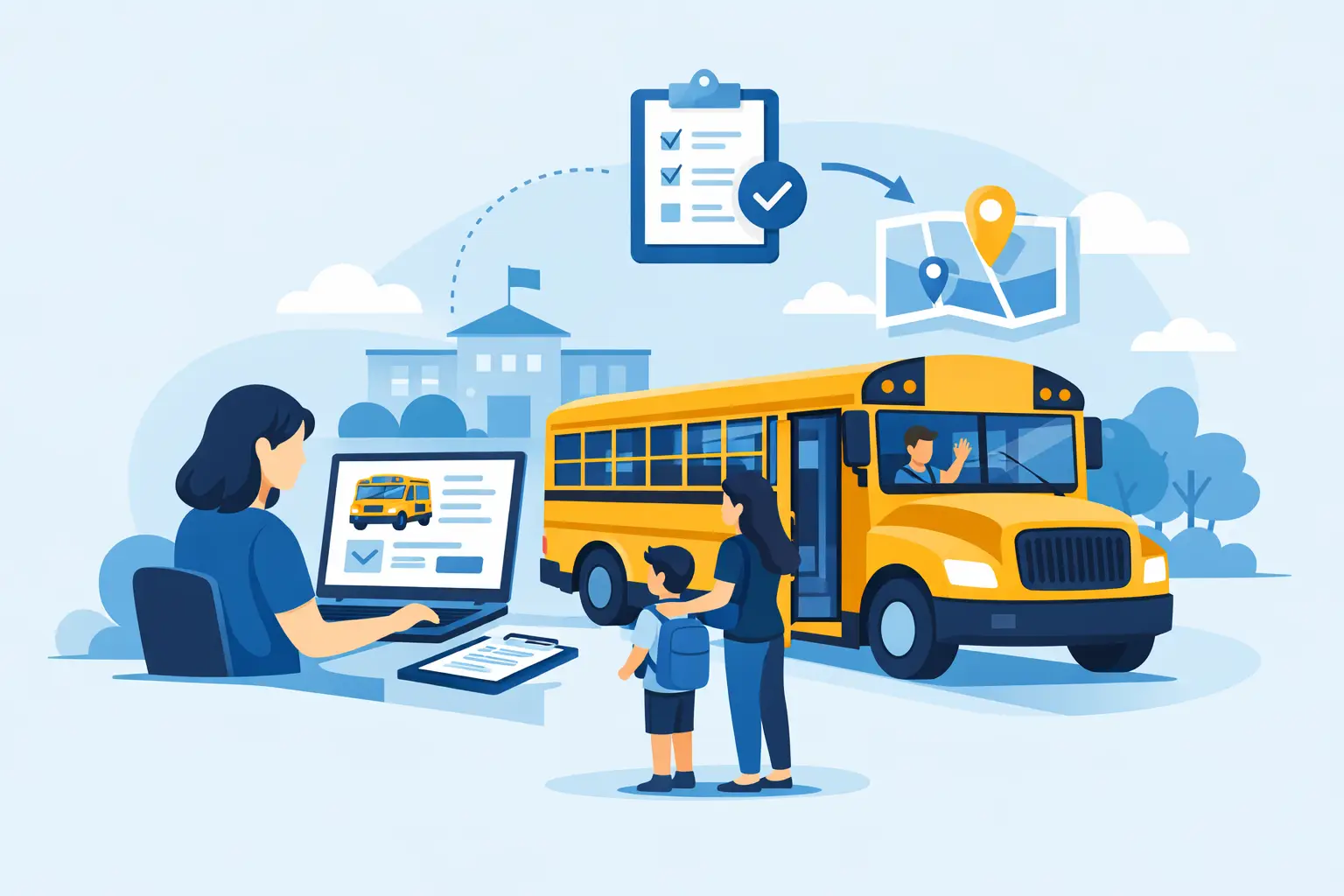
The first day of school is stressful enough without standing at the curb wondering whether the bus stop changed, the pickup time shifted, or the route was reassigned. If you are trying to figure out how to find school bus routes, the fastest path is usually not a generic map search. It starts with the school, the transportation provider, and a few key details about the student.
For parents, school administrators, and anyone arranging regular student transportation, the process is usually straightforward once you know where route information actually comes from. School bus routes are planned around student addresses, school schedules, vehicle capacity, safety rules, and local traffic patterns. That means route details are often assigned, adjusted, and communicated through official channels rather than posted publicly for everyone to see.
How to find school bus routes through official sources
The most reliable source is the school or school district transportation office. In many cases, route assignments are based on a student’s grade, home address, eligibility zone, and the specific school calendar. A route that applied last semester may not be the same one used this term.
Start by checking your enrollment paperwork, parent portal, or school communications. Many schools send route details before the school year begins, especially if transportation has already been requested and approved. If you do not see anything, contact the school office and ask whether transportation is handled internally or by a contracted bus operator.
If a private transportation company manages the service, the school will usually direct you to the correct dispatch team or service coordinator. This matters because bus operators often manage route timing, stop sequencing, driver assignment, and service updates directly.
In practice, the most useful question is not simply, “What is the route?” Ask, “Can you confirm my child’s assigned bus number, stop location, pickup time, and afternoon drop-off plan?” That gets you the information you actually need for daily planning.
What information you need before you ask
Finding the route is much easier when you have the right details ready. Transportation teams typically need the student’s full name, school name, grade, home address, and sometimes student ID number. If there are custody arrangements, alternate pickup addresses, or after-school schedule changes, mention those early.
This is where many delays happen. Parents may ask for route details before transportation approval is finalized, or before the address in the system has been updated. If the school has an old address on file, the route assignment may be wrong from the start.
For school administrators, the same principle applies on a larger scale. If you are coordinating transport for a group of students, route planning depends on having an accurate roster, dismissal times, pickup points, and any special supervision needs. Incomplete data creates avoidable route changes later.
Why school bus routes are not always posted publicly
Some parents expect to find a complete route list online, similar to public transit. School transportation rarely works that way, and for good reason. Student safety and privacy come first.
Publishing full routes, exact student stops, and timing details can create security concerns. Many schools and transport providers limit what is shared publicly and instead give route information only to authorized parents or guardians. That can feel inconvenient when you need a quick answer, but it is a sensible safeguard.
There is also an operational reason. Routes change more often than people expect. New enrollments, temporary roadwork, school event schedules, weather disruptions, and driver availability can all affect stop timing or routing. A public route list can become outdated quickly.
How to confirm the correct stop and pickup time
Once you receive route information, verify the stop location carefully. Do not assume the nearest corner is the assigned stop. Bus stops are usually chosen based on visibility, traffic flow, turning space, and safety for boarding and drop-off.
If your child is new to the route, confirm whether the pickup time is an exact time or a scheduled window. Many operators advise families to be at the stop several minutes early, especially during the first weeks of school when routes are still settling into a consistent pattern.
It is also smart to ask what happens if the bus is delayed. Some providers send text updates or notify parents through a school communication platform. Others rely on the school office or transport coordinator to relay changes. Knowing the communication process in advance helps avoid confusion on busy mornings.
For younger children, ask about handoff procedures. Some services require a parent or authorized adult to be present at drop-off. Others have specific rules if no one is there. These policies are just as important as the route itself.
How to find school bus routes when there is no information yet
If school starts soon and you still do not have route details, act early rather than waiting until the day before. Transportation offices are busiest at the start of a term, and route planning can still be in progress.
Call or email the school and confirm three things: whether the student is approved for transportation, whether a route has been assigned, and who will send the final stop details. If the school uses an external provider, ask for the operator’s name and contact point.
Sometimes the issue is administrative rather than operational. The route may exist, but the consent form, fee status, address verification, or registration deadline may still be pending. In those cases, the fix is usually simple once the missing step is identified.
If you are a school arranging transport for a new term, this is where an experienced operator makes a clear difference. A dependable provider will not only plan routes but also maintain communication with administrators and parents when assignments, timings, or service conditions change.
Common reasons routes change
Even after you learn how to find school bus routes, keep in mind that route details are not always permanent. A route may change because student demand increases, road access changes, school dismissal times shift, or pickup points need adjustment for safety.
Capacity matters too. Small- to mid-size buses can be a good fit for neighborhood routes, private schools, enrichment programs, and institutions that need more responsive route planning rather than large-scale mass transit. But capacity planning has to be handled carefully. If ridership changes, routes may need to be reorganized to keep service safe and punctual.
This is why clear communication matters so much in school transportation. Families do not just want a bus. They want confidence that the route is being monitored, supervised, and updated responsibly.
What schools and parents should look for in a transport provider
The route itself is only one part of safe student transport. The provider should also have qualified drivers, proper licensing, clear dispatch procedures, and a reliable system for communicating delays or changes. Good route planning is operational, but trust is built through consistency.
Parents should expect timely updates, a clear point of contact, and practical answers when pickup arrangements change. Schools should expect route oversight, compliance with transport regulations, and the ability to manage recurring service without daily confusion.
That is especially important when transportation is not a one-off charter but a daily responsibility involving children. A provider with experience in school transport will usually think beyond the map. They will consider boarding safety, route timing, supervision, traffic conditions, and how to keep families informed.
For example, operators such as Shanz Transportation & Services place strong emphasis on dependable daily service, licensed personnel, and direct communication updates for parents and guardians. That kind of operating model matters when route reliability is part of a child’s routine, not just a convenience.
A practical checklist for route questions
When speaking with the school or transport team, make sure you leave with the details that affect the school day. Confirm the assigned stop, pickup window, drop-off location, bus number or route name, the adult contact process for delays, and any special rules for younger students.
If your child has a schedule change, medical need, or alternate address request, ask whether that affects route eligibility. Some changes are easy to accommodate. Others may require formal approval or a different route assignment. It depends on timing, capacity, and the provider’s operating policies.
The goal is not just to get a route. It is to get the right route information from the right source, with enough clarity that there are no surprises at the curb.
A good school bus service should make families feel informed, not left guessing. When route details are communicated clearly and managed consistently, the school day starts the way it should – safely, calmly, and on time.