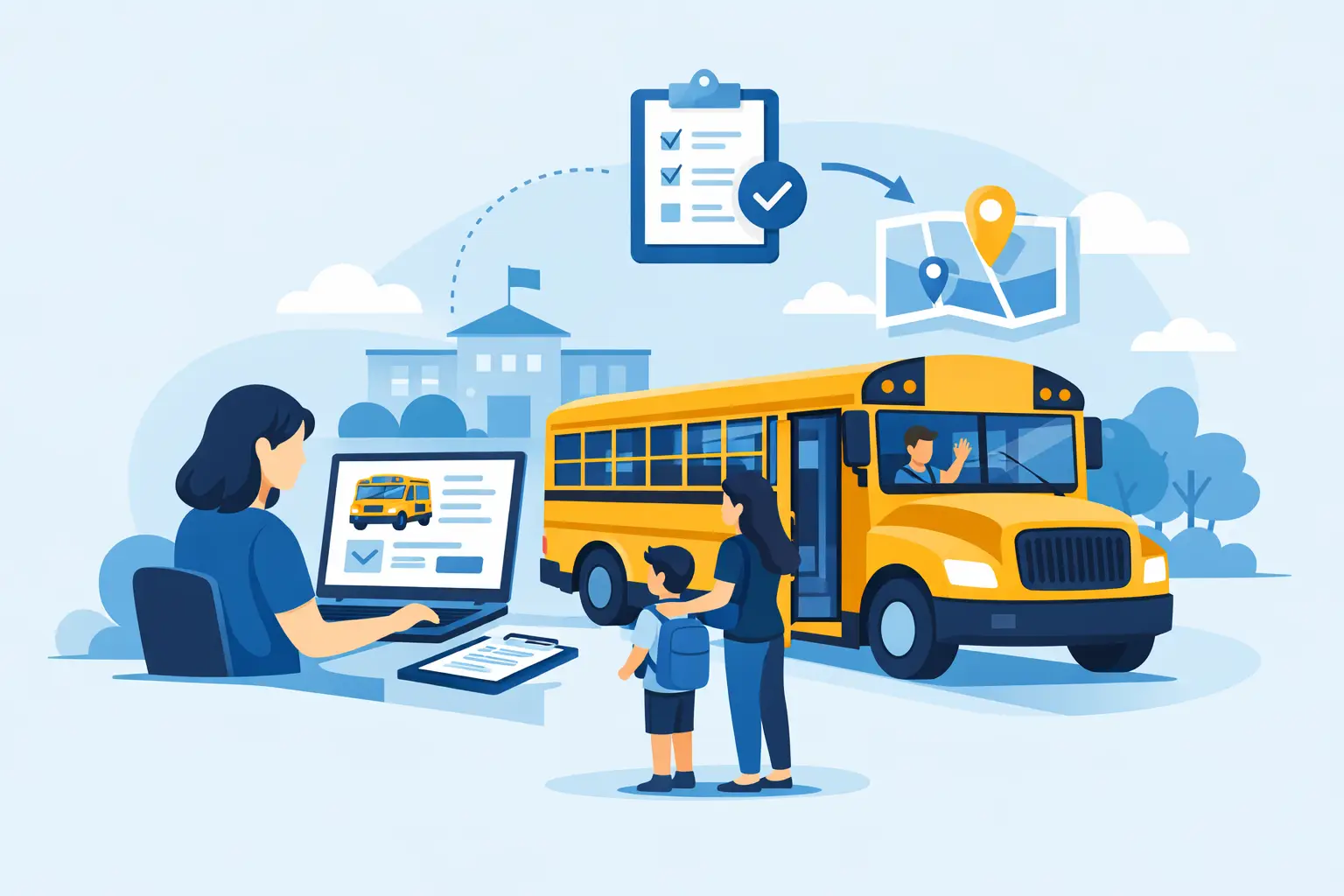
The first school week gets stressful fast when transportation is still not confirmed. If you are wondering how to apply for school bus transportation, the best approach is to start early, prepare the right details, and understand how your school or transport provider handles route planning.
For most families, the application itself is straightforward. What takes more time is confirming eligibility, pickup points, schedules, seat availability, and payment terms. That is why a clear process matters. When school transport is organized properly, parents get peace of mind and students get a safer, more predictable daily commute.
How to apply for school bus transportation without delays
The exact process varies by school district, private school, or transport company, but the core steps are usually similar. You begin by checking whether bus service is offered for your child’s school and address. Some schools provide transportation directly, while others work with appointed operators. In other cases, parents apply through a separate transport provider assigned to the school.
Before you submit anything, confirm the application window. Many transport arrangements are planned weeks or months before the school term starts. If you apply late, your child may still get a seat, but the route, stop, or timing may be less flexible. Early applications give operators more room to group students efficiently and maintain punctual routes.
You will usually be asked to provide your child’s full name, grade level, school name, home address, parent or guardian contact details, and preferred start date. Some applications also ask whether your child needs one-way or round-trip service. If the school has designated pickup points rather than door-to-door service, you may need to select the nearest approved stop.
After submission, the next step is usually review and route allocation. This is where transport teams assess whether the address falls within service coverage, whether the route is already active, and whether a safe pickup arrangement can be made. If additional coordination is needed, the transport provider may contact you to confirm details before final approval.
What you should prepare before applying
A smoother application often comes down to having the right information ready. Parents sometimes lose time not because the form is difficult, but because key details are missing or inconsistent.
Start with the basics. Make sure the home address matches the address on school records if the school uses those records to verify eligibility. If your child has different drop-off arrangements on certain days, ask whether split schedules are allowed. Some providers can support this, while others only allow one fixed route for safety and operational consistency.
You should also be ready to confirm who is authorized for pickup and drop-off communication. In school transportation, clear contact records matter. If there is a route update, delay, or attendance issue, the operator needs to know exactly which adult to contact and how quickly they can be reached.
If your child has mobility, medical, or supervision needs, disclose that early. Not every provider handles special requirements in the same way. Some accommodations are possible, but they usually need advance planning. Leaving that information out may delay approval or create avoidable issues once service begins.
Documents and details commonly requested
When learning how to apply for school bus transportation, it helps to know what paperwork may be involved. Requirements vary, but most applications ask for practical records rather than extensive documentation.
You may be asked for proof of enrollment, proof of address, emergency contact details, and a parent or guardian identification record. Some schools or providers also require acceptance of transport rules, payment terms, safety procedures, and behavior policies before the seat is confirmed.
In some cases, a recent utility bill or school registration record may be used to confirm the service address. If transportation fees apply, you may also need to complete billing information or choose a payment schedule during the application process.
It is worth reading the service terms carefully. Parents often focus on departure times and miss the policies on absences, late pickup, route changes, refunds, or temporary suspension of service. Those details become important later, especially during school schedule changes or family emergencies.
Understanding eligibility, routes, and seat availability
One of the biggest misunderstandings around school transport is assuming that applying automatically guarantees the exact arrangement you want. In practice, transportation depends on route efficiency, safety, distance, and available capacity.
Some schools prioritize students who live beyond a certain distance from campus. Others offer paid transport to any enrolled student within a service zone. Private transport providers may build routes based on demand concentration, which means service can depend on whether enough riders are located within a workable area.
Pickup style also matters. Door-to-door service sounds convenient, but it is not always practical or advisable in dense neighborhoods, gated developments, or roads with limited stopping space. A common alternative is a centralized pickup point that improves timing and reduces route disruption. For parents, this can feel less convenient at first, but it often leads to more reliable daily operations.
Seat availability is another factor. If a route is near capacity, a provider may place a new applicant on a waitlist or offer a nearby alternative route. This is especially common close to the start of term, when many families confirm transport at the same time.
Costs, schedules, and service terms
If bus service is not fully funded by the school, cost will be part of the application decision. Fees are usually based on route distance, trip frequency, service type, and whether the arrangement is shared or dedicated.
Ask how billing works before you commit. Some providers charge by term, some by month, and some require advance payment. You should also clarify whether there are registration fees, late payment charges, or fees for mid-term route changes.
Schedule expectations should be realistic. Traffic, weather, school dismissal flow, and road conditions can affect travel time. A dependable operator should still provide clear timing guidance and communication procedures, but no provider can promise an identical arrival minute every day. What matters more is consistent route management, safe driving, and prompt updates when conditions change.
This is where experienced operators make a difference. A company focused on recurring school routes, such as Shanz Transportation & Services, typically builds its service around safety procedures, communication discipline, and practical route coordination rather than one-off transport assumptions.
Common mistakes parents should avoid
The most common issue is applying too late. Transport planning is operational by nature. Routes need to be grouped, stops need to be assessed, and vehicle capacity needs to be assigned. Late submissions reduce flexibility for everyone.
Another mistake is giving incomplete address or contact information. Even a small unit number error or an outdated phone number can delay approval. The same applies to not mentioning schedule complications upfront, such as shared custody arrangements or different weekday drop-off instructions.
Parents also sometimes assume that school transport works like private ride booking. It does not. School bus transportation is structured around recurring routes, shared timing, and safety rules. That means there are limits on ad hoc changes, last-minute stop requests, or informal arrangements made outside official communication channels.
Finally, do not ignore the safety policies. Boarding procedures, authorized guardians, behavior expectations, and absence reporting are all part of a well-run transport service. These rules are there to protect students and keep routes orderly.
What happens after your application is approved
Once approved, you should receive confirmation of the route, pickup and drop-off timing, reporting instructions, fee details if applicable, and any student transport rules. Read everything carefully and save the contact information provided for route communication.
In the first week, expect some fine-tuning. Operators may adjust timing slightly as actual traffic patterns and student boarding times become clearer. That is normal. What you want to see is a provider communicating clearly and keeping the route stable once it settles.
It is also a good idea to prepare your child for the routine. Make sure they know the vehicle, the pickup point, the expected waiting time, and who to approach if they are unsure. Transportation runs more safely when students understand the routine from day one.
A practical way to think about school transport
If you are figuring out how to apply for school bus transportation, treat it less like a form to submit and more like a daily service arrangement you are putting in place for the long term. The strongest applications are early, accurate, and clear about the family’s actual needs. When the operator has complete information, the result is usually a safer route, steadier timing, and fewer problems once school starts.
A well-managed school bus service should do more than move students from one place to another. It should give parents confidence every school day, starting from the moment the route begins.