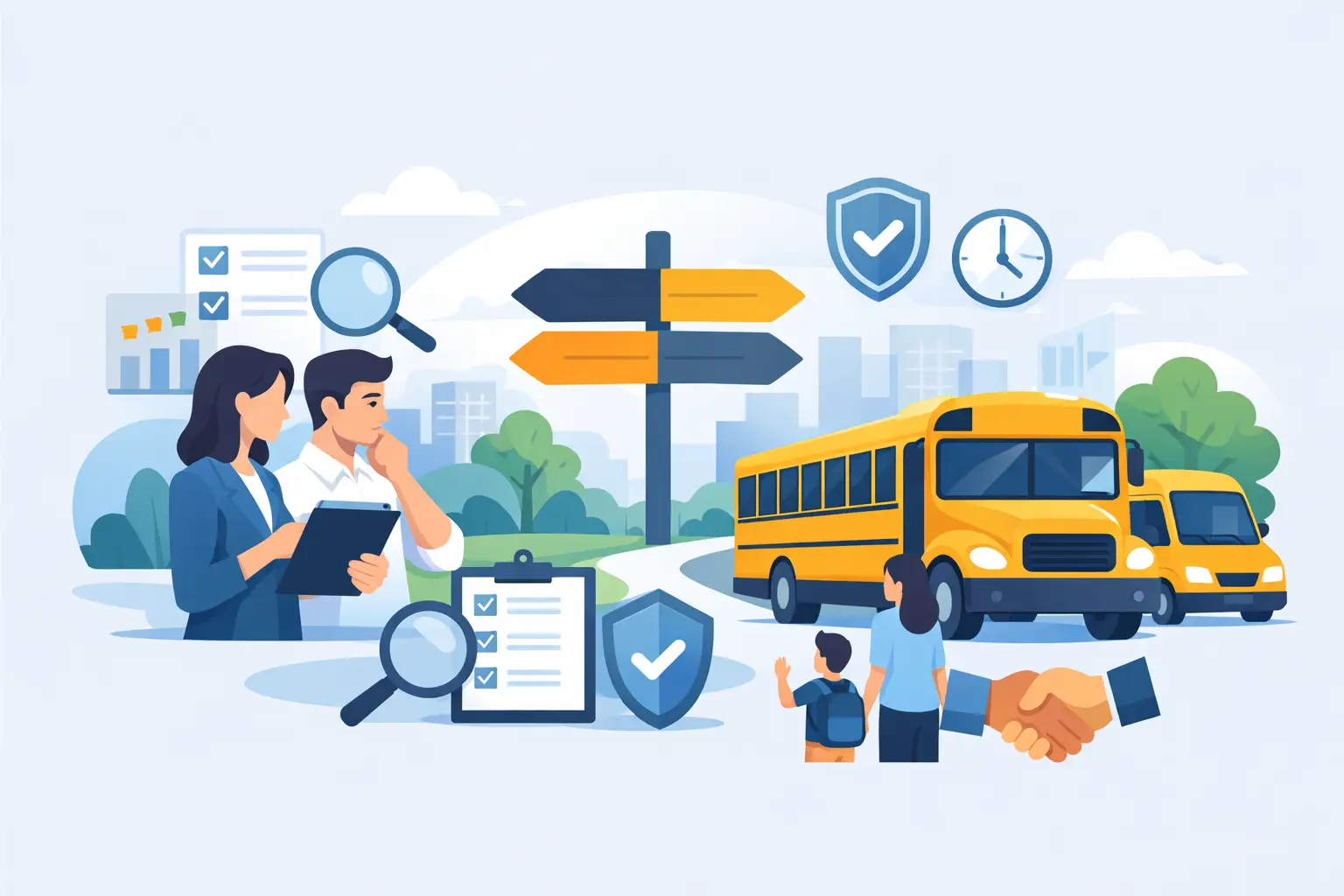
At 7:15 a.m., the difference between a calm school run and a stressful one usually comes down to one question: school bus vs parent pickup. For many families, this is not just about transportation. It affects punctuality, safety, daily schedules, and how much pressure falls on parents before the school day even begins.
There is no single right answer for every household. Some parents prefer the control of driving their child themselves. Others want the consistency and structure that comes with a dedicated school bus service. The better choice depends on your child’s age, your household schedule, traffic conditions, and how much reliability you need from the school commute.
School bus vs parent pickup: what really changes day to day
On paper, both options get a child to school. In practice, they create very different routines.
Parent pickup and drop-off can feel more flexible. If your child forgets a homework folder, needs a quick check-in, or has an unusual schedule that day, driving them yourself gives you direct control. For some families, that control brings peace of mind, especially when children are very young or still adjusting to school.
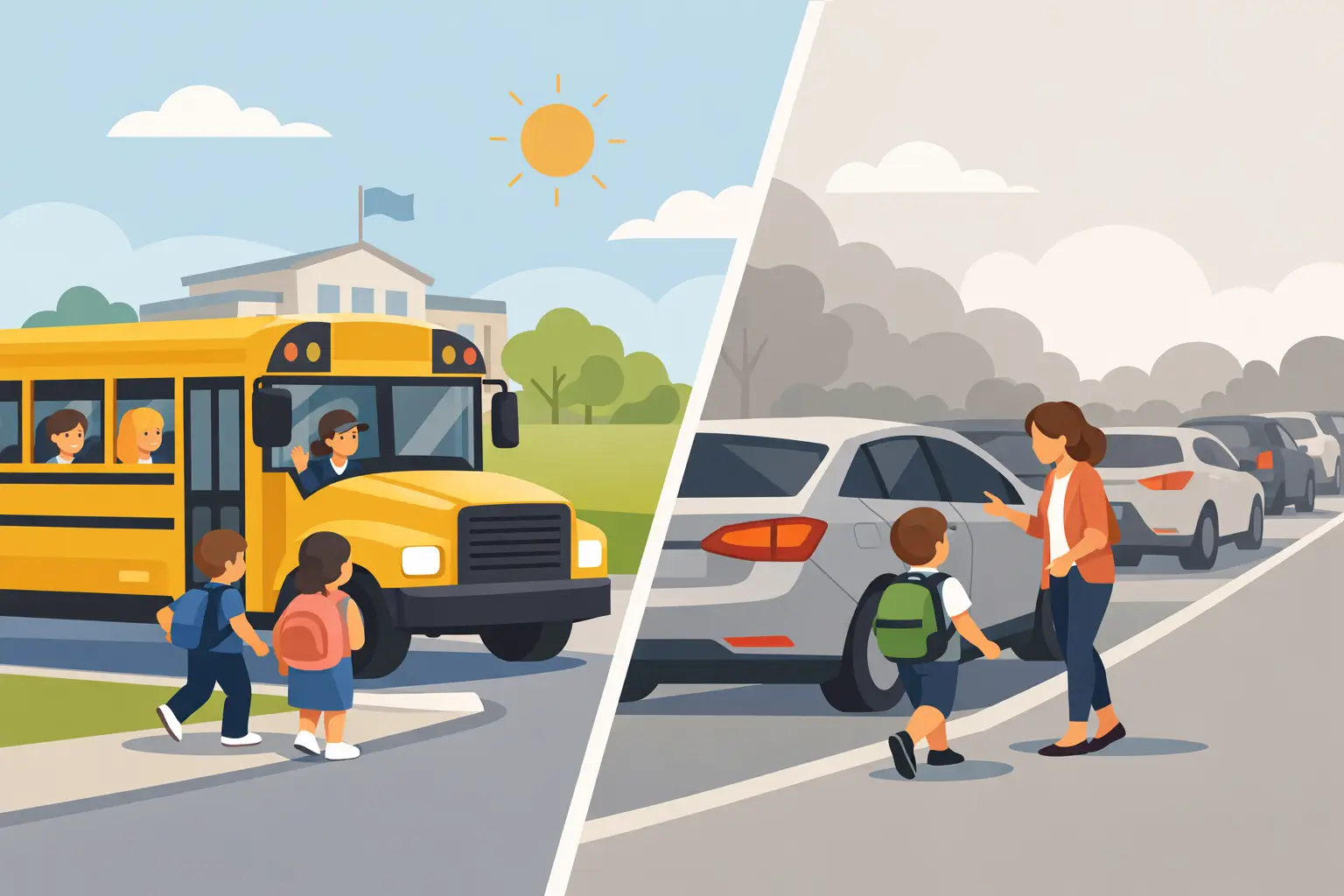
But flexibility often comes with hidden costs. Morning traffic, long school drop-off lines, parking congestion, and last-minute work conflicts can turn a simple trip into a recurring source of stress. What starts as a manageable routine can become difficult when meetings shift, a parent travels for work, or siblings attend different schools.
A school bus service works differently. It is structured, scheduled, and designed around recurring daily movement. Families trade some flexibility for consistency. Children board at set times, follow familiar routes, and arrive through an organized process. For working parents or schools managing large student populations, that predictability matters.
Safety is about more than who is behind the wheel
When parents compare school bus vs parent pickup, safety is usually the first concern. Many assume that driving their own child is automatically the safer option because it feels personal and familiar. That instinct makes sense, but safety is broader than individual supervision.
A professionally managed school bus service is built around repeated safety procedures. That includes licensed drivers, route planning, vehicle maintenance, supervised boarding, and communication protocols. In a well-run operation, safety does not depend on one rushed morning decision. It depends on systems that are followed every day.
Parent pickup can be safe, of course, but the environment around school car lines is often less controlled than people expect. Congested curbside areas, rushed lane changes, distracted drivers, double parking, and children moving between cars all create risk points. The issue is not whether a parent cares enough. The issue is that school pickup zones can become crowded and unpredictable very quickly.
For younger children especially, consistency can improve safety. The same pickup point, the same vehicle, and the same routine reduce confusion. That is one reason many schools and parents favor dedicated student transport rather than relying heavily on private car drop-offs.
Time pressure often decides the issue
If both parents have flexible schedules, parent pickup may work well for years. If one parent starts work later, works from home, or already commutes past the school, the arrangement can be practical.
The problem is that many families do not operate under ideal conditions. A commute that looks easy in theory can become difficult when work start times tighten, children have after-school activities, or grandparents and helpers need to step in. One delayed train, one early call, or one rainy morning can disrupt the entire plan.
A school bus service reduces the number of decisions a family has to make. That does not mean it removes all planning. Parents still need children ready on time. But once the route is established, the transport process becomes less dependent on a parent’s daily availability.
For households with two working parents, this can be a major operational advantage. Instead of building the workday around school travel, the family works around a known transport schedule. Over time, that can reduce stress more than parents initially expect.
The child’s experience matters too
Adults often assess transportation based on convenience, but children experience the routine in their own way.
For some children, parent drop-off offers comfort. A short drive can be a quiet chance to talk before school starts. It may also help children who are anxious, new to school, or managing changing routines.
For others, the bus creates independence. They learn the same routine each day, travel with familiar classmates, and develop confidence in managing a small but meaningful part of their schedule. That regularity can be especially helpful once school becomes part of a long-term daily rhythm rather than a new adjustment.
The child’s temperament matters here. Some thrive with direct parent involvement every morning. Others settle better when the process is consistent and less emotional. There is no need to force one model just because it sounds better on paper.
Cost is not always as simple as it looks
Some families assume parent pickup is the cheaper option because there is no visible transport fee. But the real cost includes fuel, parking, vehicle wear, tolls where applicable, and the value of a parent’s time. If school drop-off adds a daily detour before work, the monthly cost may be higher than expected.
A school bus service has a direct price attached, which makes it easier to compare. What families are paying for is not only the trip itself. They are paying for route planning, driver management, operational oversight, and recurring reliability.
That said, budget does matter. For some households, parent pickup remains the more practical option financially, especially if the school is very close or the route fits neatly into a parent’s existing commute. The right decision should account for both affordability and sustainability. A transport plan that works only when everything goes perfectly is usually not the strongest long-term choice.
School operations are affected by this choice
This topic is not only about individual families. Schools feel the impact of school bus vs parent pickup every day.
Heavy parent pickup volume increases congestion around campuses, slows arrival and dismissal, and places more demand on traffic marshals and staff supervision. It can also affect nearby roads and create frustration for surrounding neighborhoods.
Organized bus transport helps schools manage student flow more efficiently. Arrival windows are more predictable, curbside activity is easier to control, and schools can reduce the number of private vehicles entering and exiting at the busiest times.
For school administrators, that operational clarity matters. It supports punctual starts, improves site safety, and reduces the burden on internal staff who would otherwise have to manage long pickup queues. This is one reason experienced transport providers are valuable partners, not just vendors. They support the daily function of the school itself.
When parent pickup makes more sense
Parent pickup is often the better fit when the school is close to home, the family schedule is stable, and a parent is consistently available. It can also work well for children with frequent schedule changes, specialized needs, or transitional periods when extra reassurance helps.
Some families simply prefer direct involvement. That preference is valid, especially when the logistics remain manageable and the school’s pickup process is well organized.
The key question is whether the arrangement is dependable over time. If the plan depends on constant last-minute adjustments, it may be less practical than it appears.
When a school bus is the stronger option
A school bus tends to be the better choice when reliability, routine, and time efficiency are priorities. This is often true for dual-income households, schools with high enrollment, and families who want less morning and afternoon traffic pressure.
It is also a strong option when the service is professionally managed and communication is clear. Parents need to know that vehicles are operated by qualified personnel, schedules are monitored, and updates are available when needed. In that environment, the bus is not just a transport method. It is part of a dependable daily system.
That is why transport companies that focus on recurring school routes, operational responsiveness, and visible communication often provide more value than basic point-to-point driving. For families, trust comes from consistency. For schools, it comes from service discipline.
The better question is not which is best overall
The better question is which option fits your real routine without creating daily strain.
If driving your child works smoothly, safely, and consistently, parent pickup may remain the right choice. If the school commute regularly creates delays, stress, or scheduling pressure, a dedicated school bus service may be the more practical and sustainable answer.
For many families and schools, the strongest transport decision is the one that holds up on ordinary weekdays, not just on good days. A calm, reliable morning is not a small thing. It sets the tone for everything that follows.