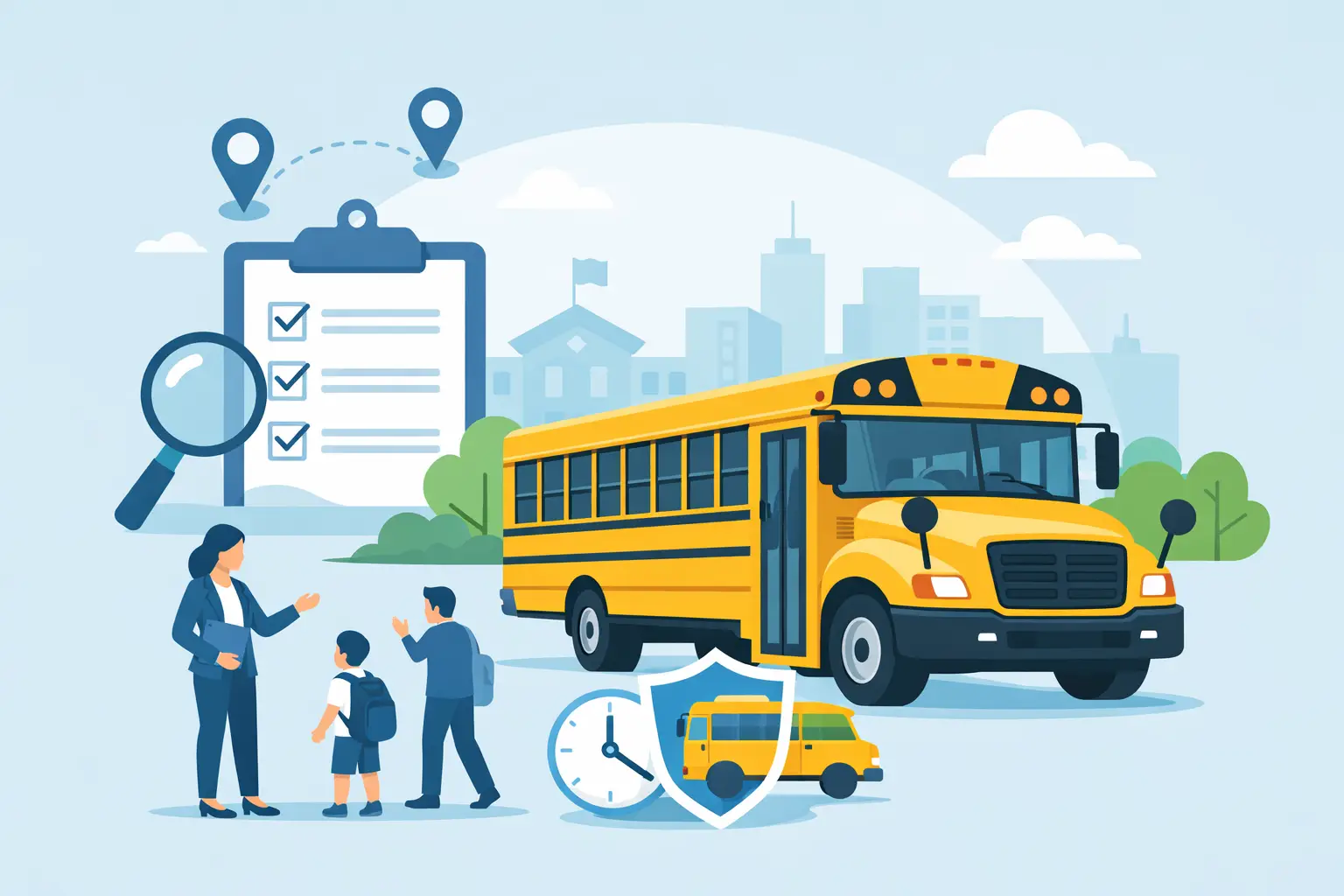
A late bus does more than delay arrival. It disrupts attendance, creates stress for families, and puts pressure on school staff who already have enough to manage. That is one of the top reasons schools outsource transport instead of trying to run every route in-house.
For many schools, transportation is not just a logistics task. It is a daily operational responsibility tied to student safety, parent confidence, and the school’s reputation. When routes must run on time every day, with proper vehicles, qualified drivers, and clear communication, outsourcing becomes less about convenience and more about risk control.
Why the top reasons schools outsource transport are practical
Schools usually do not make this decision for one single reason. They do it because transport affects too many moving parts at once – staffing, compliance, route planning, vehicle maintenance, and family communication. Managing all of that internally can be difficult, especially when student numbers change, dismissal times shift, or a driver calls out unexpectedly.
A specialized transport provider brings systems that schools often do not have the time or resources to build on their own. That does not mean outsourcing is always the cheapest option on paper. It means it is often the more stable and manageable option over time.
Safety is the first priority
When children are involved, safety standards cannot be informal. Schools need drivers who are properly licensed, vehicles that are maintained on schedule, and processes that reduce the chance of preventable issues. An experienced transport company is built around those requirements.
Outsourced providers usually operate with established inspection routines, driver screening, and route discipline. That matters because school transport is repetitive by nature. The same trips happen day after day, and consistency is what keeps standards high. A provider that specializes in recurring passenger movement is better positioned to maintain that consistency than a school trying to coordinate transport as one task among many.
There is also a communication side to safety. Parents want to know that transport is being monitored and that updates are available if something changes. A provider with live operational communication can reduce uncertainty and help schools respond quickly when delays or route adjustments happen.
Compliance is easier to manage with specialists
Transportation is not just about getting students from one point to another. It comes with legal and operational requirements that need close attention. Vehicle suitability, licensing, road safety obligations, and service records all have to be managed properly.
This is one of the clearest top reasons schools outsource transport. A school’s core job is education. A transport operator’s core job is running compliant passenger services. Those are two different disciplines.
When schools outsource, they are often looking for a provider that already understands local transport regulations and has procedures in place to meet them. That reduces the burden on school administrators and lowers the chance that transport compliance becomes an afterthought. It also makes audits, reporting, and service reviews easier to handle because there is an operator responsible for the transport function.
Reliability matters more than schools first expect
Families build their mornings and afternoons around school transport. If buses are inconsistent, the effects show up quickly – late arrivals, missed activities, confused pickup points, and frustrated parents. Reliability is not only about punctuality. It is about having backup plans when normal operations are interrupted.
An outsourced provider can usually offer stronger operational coverage than an in-house arrangement with limited vehicles and limited staff. If a vehicle has an issue or a driver is unavailable, a provider with a broader fleet network may be able to respond faster. That type of contingency planning is difficult for many schools to sustain internally unless they are running a large transport department.
This is especially relevant for schools with staggered schedules, multiple campuses, after-school programs, or changing route demand. A dedicated transport company is set up to absorb those variations more efficiently.
Outsourcing can improve cost control
Some schools initially assume keeping transport in-house will save money. Sometimes it can, especially if the school already owns suitable vehicles, has internal maintenance capability, and can recruit dependable drivers without difficulty. But those conditions are not common.
The real cost of school transport includes far more than fuel and payroll. It includes maintenance, repairs, insurance, compliance administration, replacement vehicle planning, driver recruitment, route supervision, and the cost of service failures. When those factors are added up, outsourcing can provide more predictable budgeting.
The benefit is not always that outsourced transport is cheaper in every month. The benefit is that costs are easier to forecast and operational surprises are reduced. Schools often value that stability because it supports planning across the academic year.
Staffing is a growing challenge
Driver recruitment and retention are ongoing issues in many transport markets. Hiring suitable drivers for school routes is not simple. Schools need people who are licensed, punctual, professional, and comfortable working around children and families every day.
That is a specialized hiring need, and not every school wants to manage it directly. Even when schools do recruit successfully, absences and turnover can create immediate service gaps. Outsourcing shifts that responsibility to a provider whose operations are built around driver management.
This does not remove all risk. A transport provider can face staffing pressure too. The difference is that managing drivers is part of the provider’s day-to-day business model, not an extra administrative burden added onto a school office.
Schools need flexibility as enrollment and schedules change
Transport needs rarely stay fixed for long. Enrollment rises or falls. New pickup points are added. Dismissal times change for exams, events, or seasonal programs. Younger students may need different supervision arrangements than older ones. Schools that manage transport internally often find that each adjustment creates more operational strain than expected.
Outsourcing helps because capacity can be matched more closely to actual route demand. A school may not need large buses for every route. In many cases, small- to mid-capacity vehicles are a better fit for neighborhood clusters, feeder services, or specialized student movement. That kind of right-sized planning can improve efficiency without compromising service quality.
A provider such as Shanz Transportation & Services, with experience in recurring school routes and smaller bus configurations, reflects why many schools look for partners instead of trying to build a one-size-fits-all transport system themselves.
Parent confidence is part of the service
Schools are not only moving students. They are managing parent expectations. Families want transportation to feel structured, supervised, and dependable. If communication is weak, even a minor delay can quickly become a trust issue.
Professional transport providers support schools by giving transport a visible operating framework. Parents tend to feel more assured when there is a clear service process, designated contact points, and timely updates when needed. That reassurance matters because transport is one of the few school services parents interact with every single day.
For school leaders, that means outsourcing can support not just logistics but also community confidence. A school that runs dependable transport looks more organized overall.
Risk is easier to manage when responsibility is clear
One overlooked reason schools outsource is accountability. When transport is handled internally without a dedicated department, responsibilities can become scattered. One team manages schedules, another handles parent queries, and someone else deals with vehicle issues. That can slow response times and create confusion when problems arise.
With outsourcing, the transport function has a defined operational owner. Expectations can be set through service agreements, route reviews, and communication protocols. That makes performance easier to monitor and problems easier to escalate.
Of course, outsourcing only works well when the provider is responsive and experienced. A poorly chosen vendor can create just as many problems as an overstretched internal setup. That is why schools should evaluate providers on safety record, communication standards, backup support, and route experience, not just price.
The best decision depends on the school model
Not every school should outsource transport in the same way. A large district with its own fleet infrastructure may keep part of the service in-house and outsource overflow or specialized routes. A private school may outsource everything because it wants simplicity and operational focus. A school with compact local enrollment may need only a few fixed routes, while another may need flexible capacity throughout the year.
The point is not that outsourcing is automatically better in every situation. It is that for many schools, the top reasons schools outsource transport come down to control, not loss of control. They gain safer processes, clearer accountability, steadier service, and more time to focus on students rather than vehicles and route disruptions.
When transportation works properly, it is almost invisible. Students arrive safely, parents feel informed, and staff can stay focused on the school day ahead. That quiet reliability is often the strongest reason of all to put transport in experienced hands.