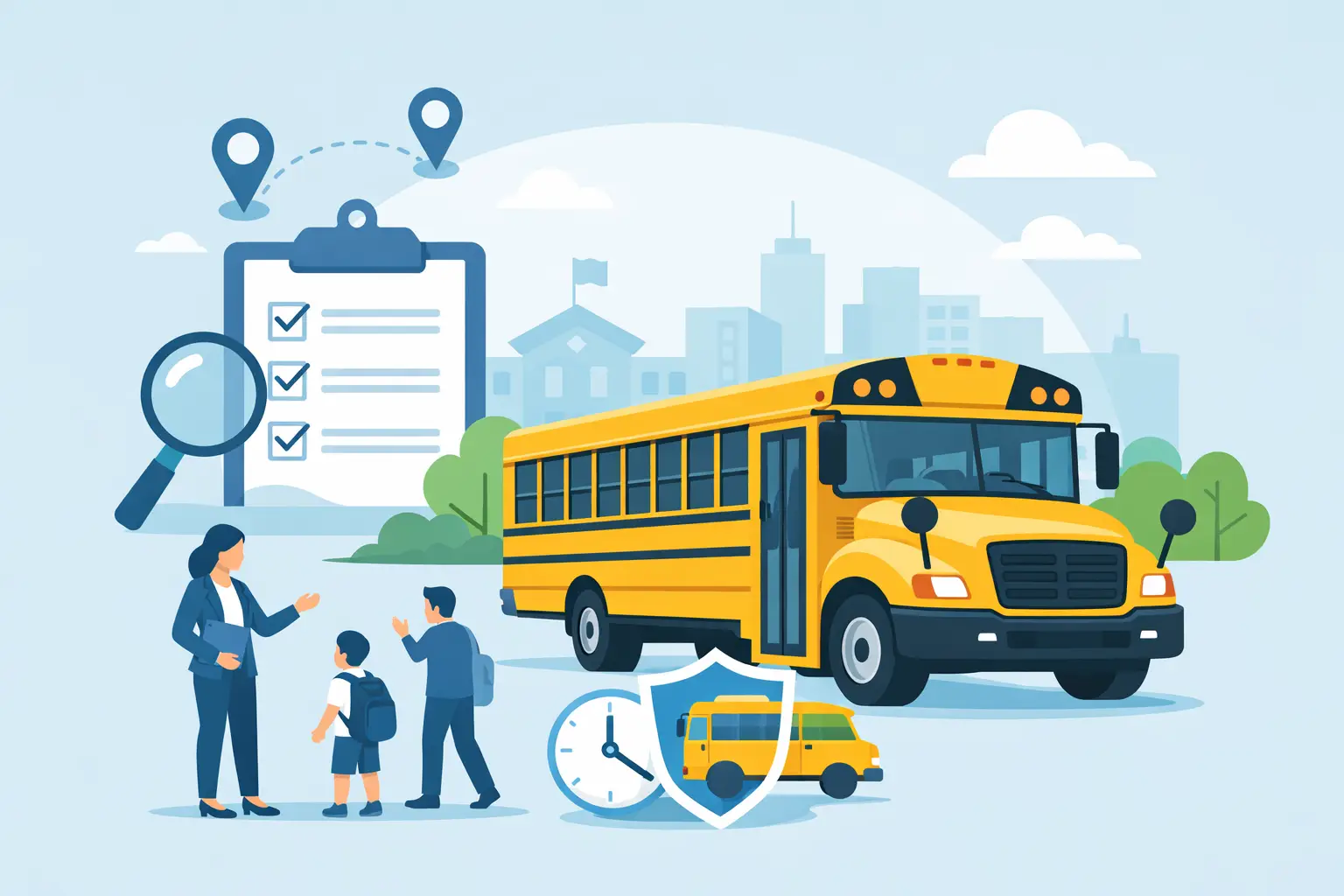
A school route can look routine from the outside, but anyone responsible for children during pickup and drop-off knows how much can change in a few minutes. School bus attendant responsibilities go far beyond being present on the vehicle. The role is active, safety-focused, and closely tied to the daily trust that parents and schools place in a transport provider.
For younger students, children with additional needs, or routes with multiple pickup points, the attendant often becomes the person who keeps the ride orderly, calm, and safe. That matters because the safest bus service is not only about the vehicle or the route plan. It is also about the adults on board, how they supervise children, and how they respond when something does not go as expected.
What school bus attendant responsibilities include
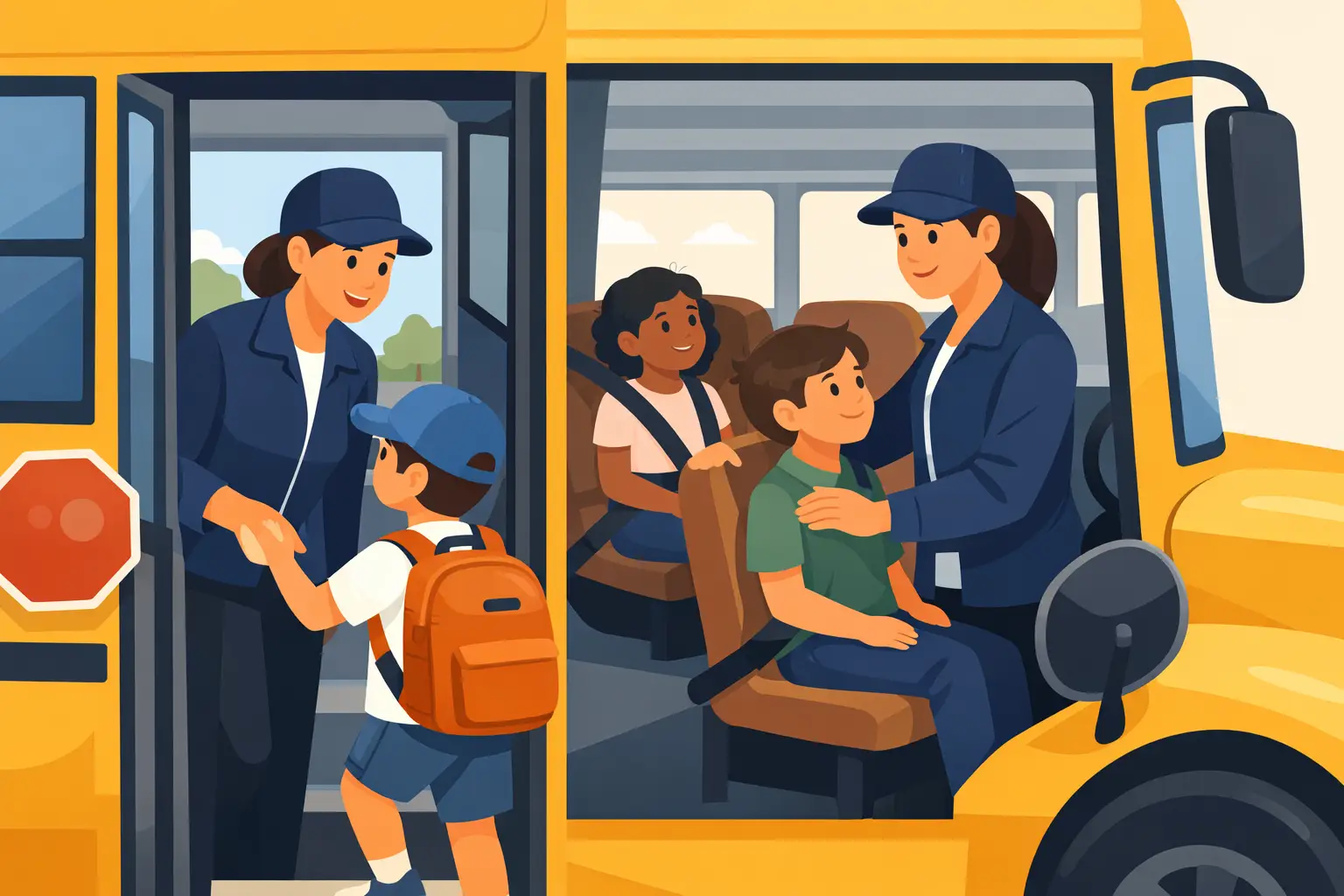
At the most practical level, an attendant helps supervise students while the driver focuses on the road. That sounds simple, but in real operations it covers several connected duties. The attendant monitors boarding and exiting, helps students find and remain in the correct seats, watches for unsafe behavior, and supports students who may need extra assistance during the trip.
This role also creates structure. On a busy morning route, even small delays or distractions can affect safety. An attendant helps maintain order so that movement inside the bus stays controlled. Students are less likely to crowd the front, stand while the bus is moving, or miss their stop when someone is actively managing the passenger area.
In many cases, attendants are also the extra set of trained eyes during handoff points. Pickup and drop-off are where the highest attention is needed. The attendant may verify that a student boards at the right location, confirm that younger children are released appropriately, and make sure no child is left unsupervised in a way that conflicts with school or family instructions.
Safety comes first, not second
The clearest responsibility of a school bus attendant is student safety. That includes physical safety inside the bus, safe movement at the door, and situational awareness around every stop. While the driver manages traffic and vehicle control, the attendant helps reduce risks among passengers.
That can mean reminding students to stay seated, keeping aisles clear, and stepping in early when horseplay starts. It can also mean recognizing when a child is upset, unwell, or struggling and needs attention before the situation affects the rest of the trip. A good attendant does not wait for a problem to become obvious. They notice patterns and respond early.
There is also an emergency side to the role. Attendants should understand evacuation procedures, know how to assist children quickly, and stay calm if the route is disrupted by weather, traffic issues, or a medical concern. In real service, emergency readiness is not just a box to check. It is part of maintaining confidence on every run.
Boarding, seating, and drop-off control
Much of the day-to-day work happens in short windows of time. Boarding is one of them. Students often arrive with bags, lunch boxes, changing moods, and varying levels of independence. An attendant helps that process stay organized.
They may guide younger riders onto the bus, help them settle into assigned or suitable seats, and watch for students who need a slower pace. This is especially useful on routes serving preschoolers, elementary-age children, or students who are new to the service.
Drop-off requires the same level of care. Releasing a child at the wrong stop or without proper supervision can create immediate risk. That is why school bus attendant responsibilities often include stop awareness, student identification, and adherence to release procedures. The exact process may differ by school policy, age group, or family arrangement, but the principle stays the same: every child should get on and off the bus in a controlled and accountable way.
Behavior support on the bus
Parents and schools often think of behavior as a discipline issue. On a school bus, it is also a safety issue. A loud or distracted bus can interfere with the driver’s concentration. Students moving around while the bus is in motion can create hazards for themselves and others.
A bus attendant helps prevent that by setting expectations and reinforcing them consistently. The best attendants are firm without being confrontational. They know how to speak clearly, redirect behavior early, and keep the atmosphere respectful.
This part of the role requires judgment. Not every issue needs escalation, but not every issue can be ignored. A child having a difficult morning may need reassurance. Repeated unsafe behavior may need documentation and follow-up with the school or family. The balance matters. The goal is not simply to keep the bus quiet. It is to keep the ride safe and manageable for everyone on board.
Support for students who need extra assistance
Some routes require more than standard supervision. Students may need physical help entering or exiting the vehicle, reminders about routines, or a calmer approach during transitions. In these cases, the attendant becomes even more important.
School bus attendant responsibilities may include assisting students with mobility concerns, helping them manage personal items, or supporting children who benefit from structured communication. The attendant is not replacing educational or medical staff, but they are often part of the practical support system that makes transportation workable and safe.
This is where training and temperament both matter. Patience is important, but so is consistency. Children who need extra support often do best when routines are predictable and instructions are clear. An experienced attendant helps create that stability during what can otherwise be a stressful part of the school day.
Communication with drivers, schools, and families
Reliable transportation depends on communication. An attendant is often the person who notices attendance patterns, route issues, or student concerns first. That information needs to be passed on accurately and promptly.
On the bus, communication with the driver must be clear and professional. The driver and attendant work as a team, but they have different responsibilities. The driver should not be pulled away from road focus unless necessary, and the attendant should know when to handle a situation independently and when to alert the driver.
Outside the bus, attendants may also help relay information about delays, student no-shows, incidents, or changes in routine through the proper channel. For a company focused on recurring school transport, this kind of operational responsiveness is part of service quality. Parents are not only looking for a ride. They are looking for confidence that the adults managing that ride are paying attention.
Why schools and parents should care about the role
Not every route requires an attendant, and that is where context matters. Older students on a simple route may not need the same level of onboard supervision as younger children or mixed-needs groups. But when routes involve early-age students, multiple handoff points, or higher supervision needs, the presence of a capable attendant can make a measurable difference.
For schools, this supports safer operations and clearer accountability. For parents, it adds reassurance during the part of the school day they cannot directly supervise. For transport providers, it strengthens consistency across the route.
A well-run service does not treat the attendant as an extra. It treats the role as part of the safety system. That includes proper hiring, route familiarity, child-safe conduct, communication discipline, and clear procedures for routine and non-routine situations.
What good performance looks like in practice
The strongest attendants are alert, calm, and consistent. They know students by name, understand route expectations, and do not let small issues grow into bigger ones. They can manage a busy pickup without creating confusion and handle a delay without making children feel unsettled.
They also understand the limits of the role. An attendant should support safe transport, not improvise outside policy. If a release instruction is unclear, if a child is missing at pickup, or if a medical or behavior issue crosses a threshold, the response should follow established procedure. Reliability comes from doing the basics well every day and handling exceptions with discipline.
For transport operators such as Shanz Transportation & Services, that standard matters because school transport is built on repetition. A family may use the same route five days a week for months or years. Trust is not earned through one good ride. It is built through consistent safe handling of ordinary mornings, busy afternoons, and the occasional unexpected problem.
When people ask what a school bus attendant really does, the best answer is this: they help turn a bus route into a supervised, predictable, and safer part of a child’s day. That is the kind of responsibility that deserves attention, training, and respect.