A school bus route is only routine when everything works exactly as it should. Parents need to know where their child is, schools need dependable arrivals, and transport providers need systems that reduce risk every single day. That is why the best school transport safety features are not limited to what is installed inside the vehicle. They also include driver standards, communication processes, boarding control, and daily operating discipline.
For schools and families, safety is rarely about one standout feature. It is usually the result of several measures working together. A bus may have seat belts, but if boarding is rushed or attendance checks are weak, the overall journey is still exposed to avoidable problems. The right question is not simply whether a bus looks safe. It is whether the full transport operation is built to keep children protected, accounted for, and transported reliably.
What the best school transport safety features really include
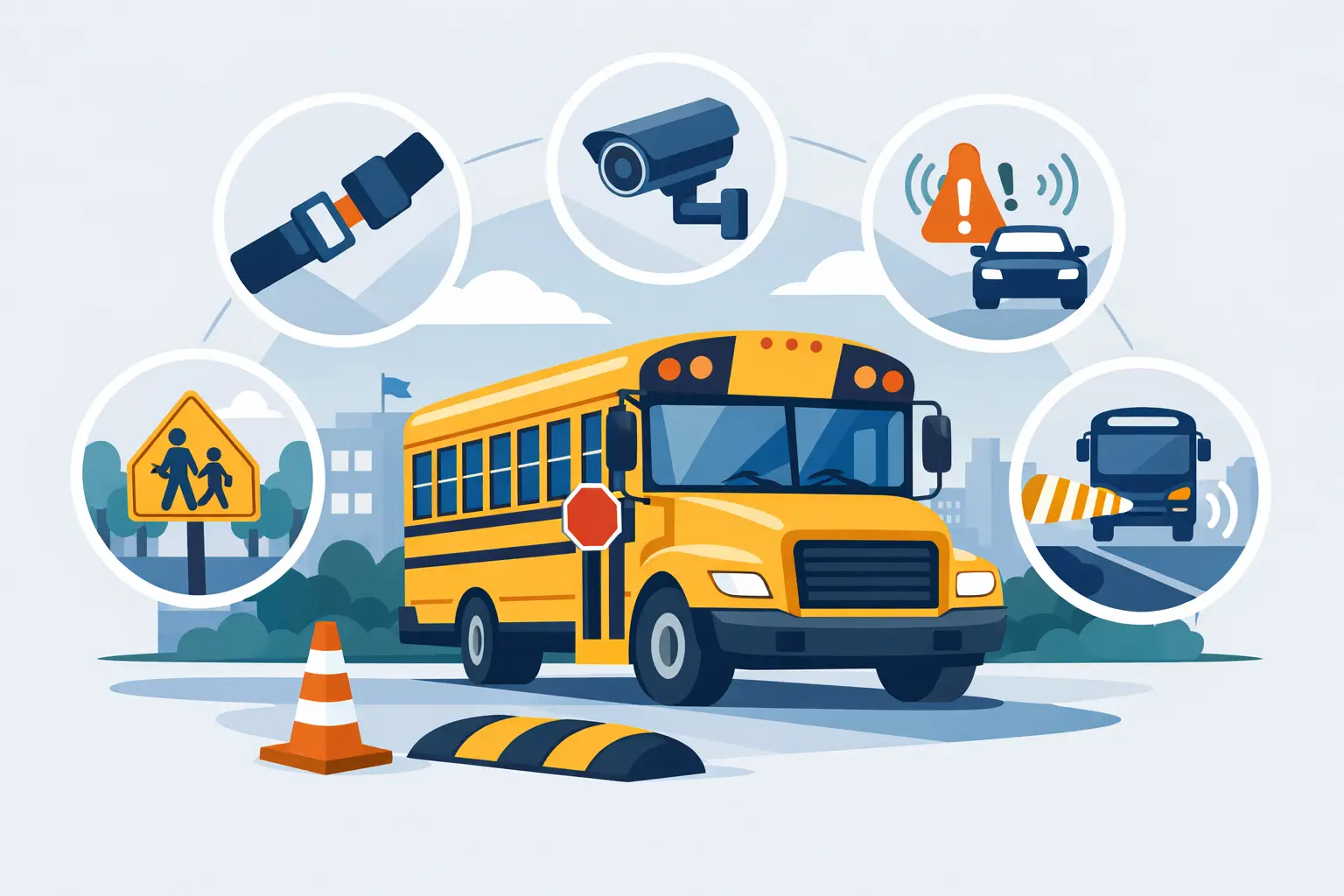
When people think about school transport safety, they often picture hardware first. Seat belts, cameras, GPS, and speed monitoring all matter. But in practice, the safest transport services combine physical safety features with strong route management and clear communication.
This matters especially on recurring school routes, where consistency is everything. Children board at the same points, parents follow a fixed routine, and schools expect punctual arrivals. A provider that treats school transport as a structured daily service rather than a casual transfer is usually better positioned to manage risk. Small details such as how late pickups are handled, how guardians are updated, or how substitute drivers are briefed can make a meaningful difference.
Driver screening and training come first
The most important safety feature on any school route is the driver. A well-maintained vehicle still depends on the judgment, awareness, and professionalism of the person behind the wheel.
Schools and parents should expect drivers to be properly licensed, experienced with passenger transport, and familiar with child-focused route procedures. That includes safe stopping habits, calm interaction with students, and a clear understanding of what to do if a child is absent, unwell, or not met at drop-off.
Training matters just as much as licensing. A driver may be legally qualified to operate a bus, but school transport demands extra care. Younger passengers can be unpredictable. Boarding points may be crowded. Weather, traffic, and last-minute schedule changes can add pressure. Drivers should be trained to manage these situations without cutting corners.
There is also a practical trade-off here. Some operators focus mainly on filling routes at the lowest cost, which can lead to frequent driver changes or weaker route familiarity. A more dependable provider will usually place greater value on consistency, because children and parents benefit when the same trained personnel handle the same route over time.
Seat belts and proper seating still matter
Seat belts remain one of the most recognized school transport safety features, and for good reason. On smaller buses and mid-capacity vehicles, properly fitted seat belts can provide an important layer of protection during sudden braking or impact.
That said, seat belts work best when the seating layout, passenger mix, and supervision practices support correct use. If younger children are unable to secure themselves properly or if bags obstruct seating space, the benefit is reduced. The feature itself is only part of the answer. The boarding process has to allow enough time for students to sit properly before the vehicle moves.
For schools using 13- to 23-seater buses, seating control is often easier than on larger mass-transit-style vehicles. Drivers and attendants can more easily observe whether students are seated correctly and whether aisles remain clear. This is one reason smaller recurring-route buses can be a strong fit for school communities that want closer oversight.
GPS tracking and live communication improve daily safety
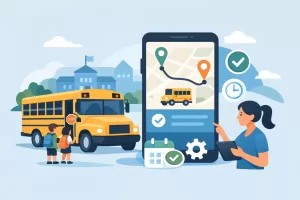
One of the best school transport safety features for families is real-time visibility. GPS tracking helps operators monitor route progress, while live communication updates help parents and guardians stay informed when traffic, weather, or operational changes affect pickup and drop-off timing.
This is not only about convenience. It reduces confusion at collection points and lowers the risk of children waiting unattended for long periods. If a route is delayed, timely updates allow parents and schools to respond quickly rather than guess what is happening.
Communication systems also help during unexpected situations. If a student is absent, if a drop-off contact changes, or if a school dismissal time is adjusted, there should be a clear channel for confirming instructions. Strong communication keeps small issues from turning into safety issues.
This is especially important in school transport because the service involves more than one party. The provider, the school, and the family all share responsibility. Good communication keeps everyone aligned.
Controlled boarding and drop-off procedures
A safe trip can be undone in the first or last two minutes. Boarding and drop-off are often the highest-risk points on a school route because they involve movement, road positioning, time pressure, and handover between adults.
The safest services use defined procedures for these moments. The bus should stop in approved areas where children can board and exit without crossing unsafe traffic paths. Drivers should know who is expected at each stop and what to do if a child is not met by an authorized adult when required.
Attendance checks are also part of this process. A simple headcount is not always enough, especially on multi-stop routes. There should be a reliable way to confirm who boarded and who was dropped off. That process may vary depending on the age group, but it should never be left to assumption.
Parents should also consider whether the provider allows rushed ad hoc changes. Flexibility has value, but uncontrolled last-minute adjustments can create mistakes. A good operator will be responsive while still following a clear verification process.
Vehicle maintenance and pre-trip inspections
Even the best safety policies mean little if the bus itself is not maintained properly. Preventive maintenance is one of the least visible but most important parts of school transport safety.
Regular servicing, brake checks, tire inspections, lighting checks, and door mechanism testing should be standard practice. On top of scheduled maintenance, drivers should complete pre-trip inspections before daily operation. These checks help identify issues early, before they affect a route carrying students.
For schools and parents evaluating transport options, this is a point worth asking about directly. A provider should be able to explain how vehicles are inspected, how defects are reported, and how quickly replacement arrangements are made if a bus cannot operate safely. Operational responsiveness is part of safety. If a vehicle issue causes delay, there should be a backup plan rather than pressure to keep an unfit vehicle on the road.
Cameras, speed monitoring, and route oversight
Technology can support safer school transport when it is used for accountability rather than appearances. Interior and exterior cameras can help document incidents, support driver coaching, and provide an extra layer of oversight. Speed monitoring can help identify unsafe driving patterns before they become serious problems.
These tools are useful, but they are not a substitute for management. Someone has to review the information, follow up on exceptions, and act on what the system shows. A bus with cameras but no active oversight is less reassuring than a service with simpler equipment and strong day-to-day supervision.
Route oversight is where responsible operators stand out. Delays, repeated harsh braking, frequent route deviations, or boarding problems should trigger review. The goal is not to create pressure for drivers. It is to maintain a stable, safe service standard.
The best school transport safety features depend on age and route type
Not every route needs the exact same setup. A route serving kindergarten students may require tighter handover procedures and more direct guardian communication than one serving older students. A short neighborhood loop may have different risks than a longer cross-district route with heavy traffic exposure.
That is why schools should avoid a one-size-fits-all checklist. The better approach is to match safety measures to the age of the passengers, the number of stops, traffic conditions, and the need for communication. For some school communities, live updates and strict release procedures may be the top priority. For others, seat-belted smaller buses and stable driver assignment may matter more.
A dependable provider will be able to explain these trade-offs clearly. In practice, the best service is the one that combines compliant vehicles, qualified drivers, disciplined procedures, and responsive communication in a way that fits the route.
For families and administrators reviewing providers, it helps to look beyond promises and ask how the service works on a normal Tuesday morning. Safety is built in those ordinary moments – the pre-trip check, the on-time arrival, the verified pickup, the calm driver, and the update sent before anyone has to ask. That is the standard worth expecting from school transport every day.