The 7:05 a.m. pickup matters just as much as the 2:15 p.m. drop-off. For parents, schools, and transport coordinators, a school bus transportation app is not just a convenience feature. It is part of how daily service stays visible, accountable, and calm – especially when children are involved and timing cannot drift.
In school transport, trust is built through consistency. Buses arrive when expected, guardians receive timely updates, and schools know who is on board and when. An app can support that process, but only if it is designed around real transport operations rather than generic tracking features.
Why a school bus transportation app matters
School transportation has a narrower margin for error than many other transport services. A late shuttle for an event is inconvenient. A missed or unclear school pickup creates immediate concern for parents and administrative staff. That is why visibility matters.
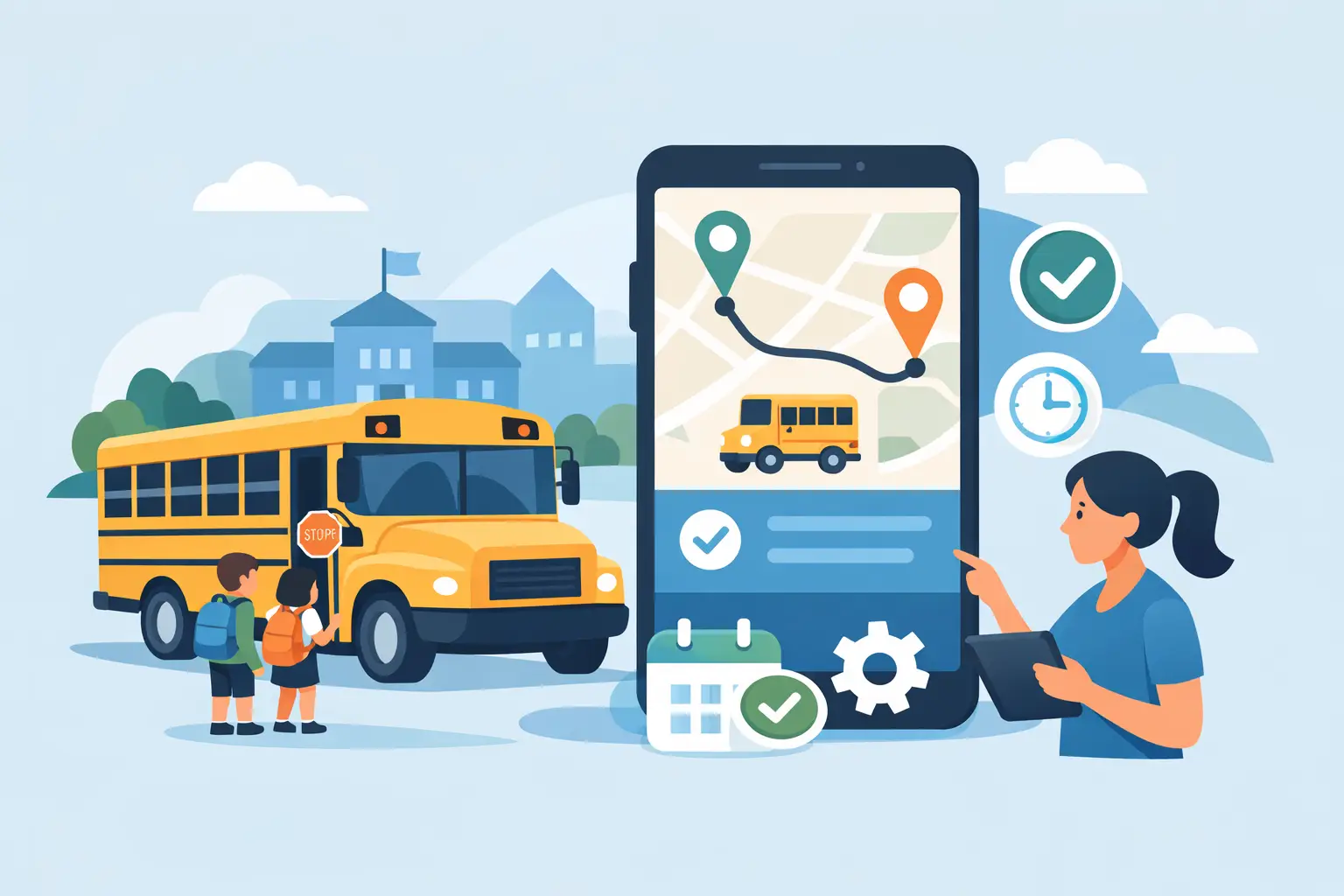
A well-designed school bus transportation app helps reduce uncertainty. Parents do not need to guess whether the bus is delayed in traffic. Schools do not need to rely on repeated phone calls to confirm arrival times. Transport operators can communicate faster when there is a route change, a weather issue, or a temporary delay.
That said, an app is not a replacement for disciplined operations. If routing is poorly planned or communication protocols are weak, software alone will not fix the service. The app should support a strong transport process, not cover for a weak one.
What parents expect from a school bus transportation app
Most parents are not looking for advanced dashboards or detailed fleet analytics. They want clear answers to simple questions. Has the bus left? Is it arriving on time? Did my child board? Was my child dropped off safely?
Real-time location updates are useful, but they need context. A moving bus icon on a screen is only helpful if the timing is accurate enough to support actual planning. If parents still need to wait outside for twenty minutes because the arrival estimate is unreliable, the app creates frustration instead of confidence.
Notifications also need to be practical. Parents usually benefit most from alerts tied to real moments in the journey, such as bus departure, approach to pickup point, student boarding, and safe drop-off. Too many updates can become noise. Too few leave room for uncertainty.
For families with younger children, confirmation matters more than convenience. They want to know that there is a clear record of handoff and arrival. In that sense, the value of the app is not only speed. It is accountability.
What schools need beyond tracking
A school bus transportation app should help schools manage daily transport more efficiently, but tracking is only one part of the picture. Administrative teams often need coordination tools that support recurring routes, student lists, attendance visibility, and communication with both parents and operators.
For schools, the real benefit is reduced friction. When transport data is organized clearly, staff spend less time managing avoidable confusion. They can verify who is assigned to which route, identify whether a student boarded, and respond faster if a parent raises a question.
There is also a practical operational benefit. If route updates, bus assignments, or timing changes can be communicated in a structured way, schools gain a more stable daily transport process. That matters even more during exam periods, early dismissal days, bad weather, or campus events when transport schedules may shift.
Still, not every school needs the same system depth. A small private school with a limited route network may value simple communication and reliable updates over advanced reporting tools. A larger institution with multiple buses and varied pickup zones may need stronger route management and user access controls. The right fit depends on the complexity of the transport program.
Core features that actually help
The best app features are usually the most practical ones. Live GPS tracking is often the first thing people ask about, and it does matter. But by itself, it is not enough. It should sit alongside clear route visibility, timely notifications, and accurate passenger records.
Student boarding and drop-off confirmation is one of the most useful functions in school transport. It creates a record that can be checked quickly by both transport providers and families. In situations involving younger students or designated guardians, this becomes even more valuable.
Route and schedule management is another core function. School transport is repetitive by nature, but that does not mean it is static. Pickup points change, students transfer, and temporary route adjustments happen. The app should make those updates visible without creating confusion for drivers, parents, or school staff.
A built-in communication channel can also help, especially when there is a delay or operational issue. Parents should not need to search across text messages, email threads, and separate chat groups to find out what is happening. Centralized communication reduces missed messages and mixed instructions.
Safety and privacy cannot be secondary
Any school bus transportation app deals with sensitive information. That includes student names, route details, guardian contacts, and location data. For that reason, convenience should never come ahead of privacy and access control.
Schools and operators should pay close attention to who can view data, who can edit transport details, and how updates are verified. A strong app should support role-based access so that different users only see what they need. Parents need visibility into their child’s trip. School administrators may need route oversight. Drivers need operational information, but not necessarily broader family data.
Safety also includes how the app supports the service on the ground. For example, if boarding confirmation requires too many manual steps, it may not be used consistently during busy school runs. A feature that looks strong in a demo can fail in daily use if it adds friction for drivers or attendants.
That is why practical usability matters. In school transport, the safest system is often the one that can be followed reliably every day.
The operational side most buyers overlook
When schools or parent groups evaluate technology, it is easy to focus on screens and features. What often gets overlooked is the transport operator’s ability to use that technology consistently.
A good app depends on good service discipline. GPS updates must be tied to actual vehicles. Route changes must be entered accurately. Drivers and operations staff must know how to use the system without disrupting pickups and drop-offs. If the provider lacks operational structure, the app may look impressive at the start but become unreliable over time.
That is where experience matters. A transport company that handles recurring school routes understands the importance of punctual dispatch, guardian communication, regulated operations, and fast response when issues arise. The app should fit into that operating model. It should not be treated as a separate layer that only works when everything else goes right.
For that reason, many schools and parents should assess the service behind the software, not just the software itself. A dependable operator with clear communication procedures will usually deliver more value than a flashy platform attached to inconsistent transport execution.
How to evaluate a school bus transportation app realistically
The best way to assess an app is to ask how it performs under normal daily pressure. Can it handle recurring routes without repeated manual fixes? Are estimated arrival times credible during traffic variations? Do parents receive useful alerts at the right moments? Can schools confirm attendance and route assignments quickly?
It also helps to ask what happens when something changes. If a student is absent, a stop is adjusted, or dismissal timing shifts, can the update be communicated clearly across the system? A good app should support routine exceptions without creating confusion.
Just as important, ask whether the app helps reduce calls and uncertainty. That is one of the clearest signs that it is doing its job. If parents still need to contact the school or operator constantly for basic status checks, the tool is not solving the core problem.
For providers like Shanz Transportation & Services, where school transport depends on safe, scheduled, and closely monitored daily movement, the right technology should strengthen communication and operational visibility without making the service harder to manage.
A school bus transportation app works best when it feels almost unremarkable – updates arrive when needed, routes stay clear, and families can get through the day without second-guessing the trip. That quiet reliability is usually the standard that matters most.