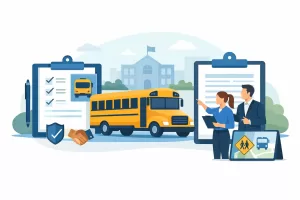
When a school bus is late once, it is an inconvenience. When it is late often, changes drivers without notice, or leaves parents unsure who to call, it becomes a daily source of stress. That is why knowing how to choose school bus operator services carefully matters from the start. The right provider does more than move children from one point to another. It supports safe routines, clear communication, and reliable school-day planning.
For parents and school administrators, the decision usually comes down to trust. Price matters, but it should not be the first filter. A lower quote can quickly become costly if service breaks down, routes are poorly managed, or safety standards are inconsistent. A dependable operator should make daily transport feel structured and predictable, not uncertain.
How to choose school bus operator services with the right priorities
The best place to start is with safety and licensing. Any operator you consider should be properly licensed, use qualified drivers, and follow local transport regulations consistently. These are not bonus features. They are the minimum standard for transporting children.
Still, basic compliance alone is not enough. Some operators meet formal requirements but fall short in day-to-day execution. Ask how vehicles are maintained, how drivers are assigned, and how route issues are handled. A provider that can explain its operating process clearly is usually more prepared than one that gives vague assurances.
You should also look at whether the operator has direct experience in school transport, not just general charter or event transport. School routes are repetitive, time-sensitive, and child-focused. They require patience, punctuality, and strong communication with both schools and families. An operator that mainly handles one-off bookings may not be structured for the consistency that daily student transport requires.
Look beyond the bus itself
Parents often focus first on the condition of the vehicle, and that is reasonable. A clean, well-maintained bus reflects care and professionalism. But the service behind the vehicle is just as important.
A good school bus operator should have a clear point of contact, a practical process for schedule changes, and a reliable way to communicate delays or route updates. If communication only happens when customers chase for answers, that is a warning sign. Families and schools need timely updates, especially when children are involved.
This is where operational responsiveness becomes a major differentiator. If a bus breaks down, is there a backup plan? If attendance changes affect pickup timing, can the operator adjust without confusion? If a parent has a concern, is there someone accountable who responds promptly? A strong operator plans for normal service and for disruptions.
Safety should be visible, not just promised
When evaluating providers, ask practical questions rather than broad ones. Instead of asking, “Is safety a priority?” ask how the company screens drivers, how often vehicles are inspected, and what the protocol is if a child misses pickup or drop-off. Specific questions reveal whether safety is built into the operation or simply used in marketing language.
It also helps to understand how the operator handles child supervision during the trip. Depending on the age group and route complexity, the school or parent may need more reassurance around boarding, seating, and arrival procedures. There is no one-size-fits-all answer here. Younger students often require tighter oversight than older ones, and route design can affect what level of monitoring makes sense.
Consistency matters too. A familiar driver who knows the route, recognizes the students, and understands the expectations of the school community can make a meaningful difference. Frequent driver changes may not always be avoidable, but they should be managed carefully and communicated clearly.
Driver quality matters as much as fleet quality
A modern bus does not automatically mean strong service. The driver remains central to safety, punctuality, and the overall experience. Families and schools should feel confident that the driver is professionally licensed, experienced with passenger transport, and suited to working around children.
Beyond qualifications, there is the human side of the role. A school bus driver needs patience, alertness, and discipline. The ability to stay calm during traffic delays, manage timing pressures, and interact appropriately with students is just as important as technical driving skill.
Reliability is what parents remember
Most transport companies can present a vehicle and offer a quote. What separates a dependable operator is whether the service remains consistent over time. School transportation is not a one-day event. It is a recurring commitment that affects attendance, work schedules, and family routines.
That is why past performance should be part of your evaluation. Ask how long the operator has handled school routes, what types of clients they currently serve, and how they manage route continuity during driver leave, vehicle servicing, or sudden demand changes. A provider with established systems is usually better positioned to keep service steady throughout the school term.
Capacity planning also matters. Some operators may have limited fleet depth, which can become a problem if there is a mechanical issue or route expansion. Others have access to partner support or additional vehicles, which can improve resilience. Bigger is not always better, but an operator should have enough operational support to avoid service interruptions.
How route fit affects service quality
Not every school bus operator is the right fit for every route. A smaller route with a focused pickup area may be better served by a compact bus and a more tailored schedule. A more dispersed route may require stronger dispatch coordination and tighter time control.
This is one reason it helps to work with an operator that understands route planning rather than simply accepting a list of addresses. The goal is not just to fill seats. It is to create a route that balances travel time, safety, punctuality, and student comfort. A well-planned route reduces unnecessary delays and makes the daily trip more manageable for everyone.
For example, a provider with experience in small- to mid-capacity buses may be especially effective where neighborhood access, efficiency, and recurring route control matter more than moving large numbers at once. In practice, the right vehicle size can improve timing and route flexibility.
Communication is part of the service
One of the clearest signs of a strong operator is how they communicate before problems happen. Do they explain pickup procedures clearly? Do they provide route details in a structured way? Do parents know whom to contact if there is a delay or concern?
For school transport, communication should be simple, direct, and timely. Parents do not want to guess whether the bus is running late. Schools do not want to mediate every transport question. A reliable operator reduces uncertainty by making updates routine and contact channels clear.
This is especially valuable at the start of a new route or school term, when routines are still settling. Early communication sets expectations and builds confidence. If an operator is disorganized before service begins, that usually does not improve once daily trips are underway.
Cost matters, but value matters more
Budget is always part of the decision, especially for schools balancing multiple vendors or families comparing private transport options. But school bus services should not be selected on price alone.
A lower-cost operator may offer less route support, weaker communication, limited backup coverage, or inconsistent staffing. On paper, the savings can look attractive. In practice, the service may create avoidable stress and require more intervention from parents or administrators.
A better approach is to compare what is actually included. Ask whether the quote covers route planning, communication support, contingency arrangements, and consistent driver assignment where possible. The most cost-effective choice is often the one that prevents disruptions and delivers stable service over time.
Questions worth asking before you commit
If you are deciding how to choose school bus operator options for your family or institution, focus your conversations on specifics. Ask who manages day-to-day operations, how delays are communicated, what backup measures are in place, and how the operator handles recurring routes over a full school year.
It is also reasonable to ask about the type of clients they typically support. An operator serving schools, staff transport, and recurring shuttle services often has a stronger process-driven mindset than one focused mostly on occasional charters. Shanz Transportation & Services, for example, positions its service around regulated operations, communication, and dependable recurring transport, which are the qualities most schools and parents need to evaluate closely in any provider.
The right choice usually becomes clear when you find an operator that answers practical questions with confidence, explains its process without hesitation, and treats reliability as a daily responsibility rather than a sales promise. When children are traveling every school day, peace of mind comes from consistency you can count on.